by digitalplus | Oct 25, 2017 | Yoga
Yoga is a traditional and cultural science of India. It is nearly 5,000-10,000 years old. It is considered both as an art as well as science from the past till now. It is an ancient practice evolved by the sages of India. It consists of eight stages of development in a step by step manner. It effects all the physical, mental, social and spiritual aspects of our life. Yoga is a physical system with a spiritual basis.
“Yoga” or “Yog” is a Sanskrit word which derives its origin from the root word “Yuj”. It has two main meanings—union (yujyati) and concentration (samadhau). In the sense of union, it means to combine, connect or join together the individual soul with the universal soul. The second sense of concentration means complete control over one’s senses and reach the state of pure awareness(Samadhi). It is one of the six great philosophies (shad darshans) of India. It is an ancient system of philosophy, lifestyle and techniques that helps in evolving the whole personality of a person.
DEFINATIONS OF YOGA
The word ‘’Yoga is defined by various people in different ways. It refers to different things in present times.
 Ahirbudhyana samhita is an ancient scripture which defines yoga for the first time. It defines yoga as samyoga yoga itiyukto jivàtma paramãtmanah—Yoga is the union of the individual self (jivàtma) with the universal self (paramãtma).
A great sage Patanjali defines yoga as’’ yogaha chitta vritti nirodhah’’ which means the stoppage of all mental modifications. These modifications of the mind or chitta are called vrittis. In other words yoga is a mental discipline for keeping the fluctuations of thoughts under control, so that the consciousness (citta)is kept in a constant and stable state(stambha vritti).
In bhagwada geeta yoga is defined as samatvam yoga uchyate which means that yoga is a state of perfect balance or equanimity. A person practicing yoga remains at peace under all circumstances.
Yoga is also defined as yoga karmasu kaushalam which means yoga is skill in action. Yoga means union or integration of human personality.
BENEFITS OF YOGA ON OUR BODY
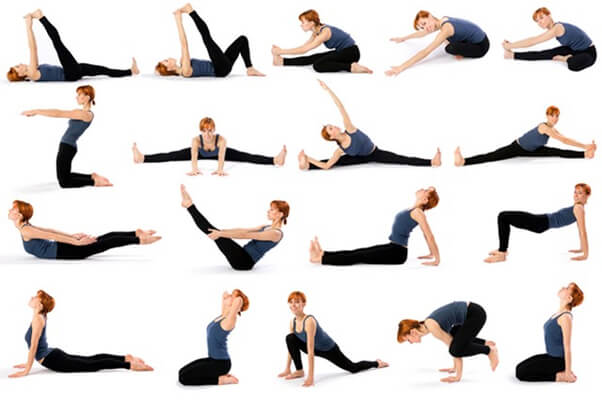
Regular practice of yoga brings about a complete transformation in our body .it helps in maintaining weight, makes our bones strong and lowers many ailments like heart disease, blood sugar level in diabetes, blood pressure and stress levels. It also improves our sense of balance , brain function, lung capacity and sexual functions. It provides relief in anxiety, reduces chronic neck and back pain. It also increases flexibility and changes gene expression.
YOGA FOR HEALTH, WELLNESS AND STRESS MANAGEMENT
Health and wellness are two factors that are closely linked with the lifestyle of an individual. Yoga provides the main basis of perfect health and wellness due to its comprehensive and holistic nature. Principles of yoga help its practitioners to develop and improve their health and deal with all kinds of stress in an effective way. A new concept called yogic “health insurance” can also be achieved by changing our perception about stress, improving our reaction towards stress and dealing with repressed stress in an effective way. The practice of yoga helps in reducing stress by various relaxation techniques. The three main elements of an individual i.e., body, mind and breathe of an individual are improved by practicing yoga, as they are likely affected by stress. Prayer and meditation are two powerful techniques used for stress management and as an alternative medicine.
AIMS AND OBJECTIVES OF YOGA
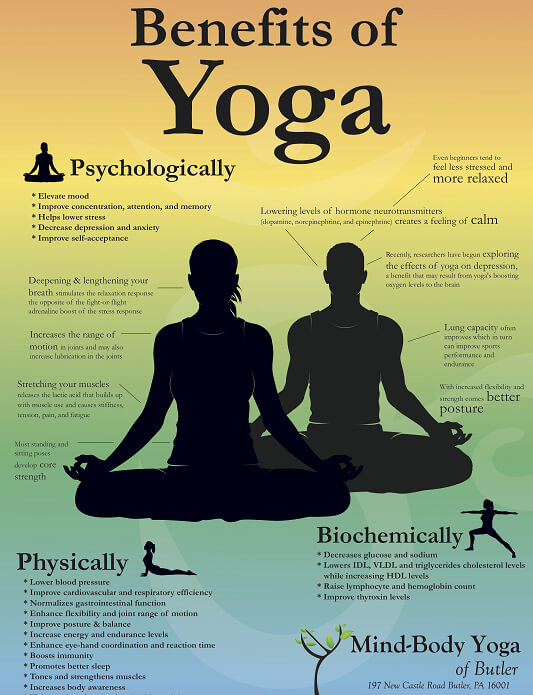 Yoga is the physical, mental, social and spiritual disciplined way of life. It is a way and view of life. Its philosophy and its practices aim at a balancing the different dimensions of human personality like mind, body and spirit. The main aim of yoga is to attain self-realization (moksha, kaivalya or nirvana) it is a state in which one is completely free from all miseries and sufferings of life. Yoga has many benefits in improving the overall quality of our life. The basic goal of yoga is gain balance and control in one’s life, to free oneself from all kinds of anxieties and stress and to provide a state of calmness. It comes from the regular practice of yogic asanas and pranayama or the breathing practices. The practice of yogic asanas help to overcome the limitations of the body. Yoga helps in reorienting and renewing the body both from inside and outside. It also relaxes the mind from all the ill effects of our modern life.
The different paths of yoga are based on different concepts and are reached by various methods. All of the different types of yoga lead to the same goal, that of self-realization. Our gross body which is the seat of the soul realizes its true identity by the practice of yoga.
Practice of yoga brings about a change in our life style and a complete transformation in our overall personality. It increases the longevity of our life.
The science of yoga is about training and transformation of mind and all other aspects of man. It helps the human being to go beyond the qualities of nature and experience perfect bliss.
The basic principle of yoga in our life is religious freedom and constant peace. Yoga is a universal dharma.
Yoga is not related to any particular religion. It is the cause of spirituality and timeless wisdom, the basis of all religions. Yoga is beyond all religions and shows the way to unity.
For more details on yoga kindly refer the following texts:-
- Patanjali Yoga Sutras
- Bhagwad Gita
- Hatha Yoga Pradipika
by digitalplus | Jun 15, 2017 | Yoga
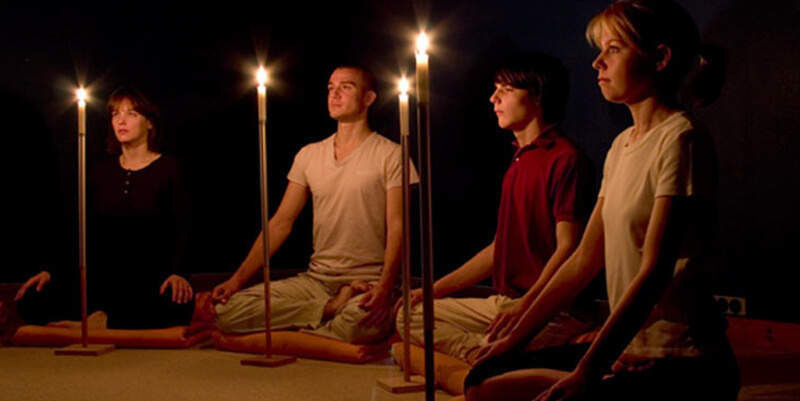
Trataka or yogic practice of concentrated gazing is an ancient hatha yoga exercise used for all round development of our body, mind and soul. The meaning of word trataka is “to look fixedly” or “to stare pointedly”. The concept of trataka is defined clearly by some yogis and old yoga texts like hatha yoga pradipika. This is how hatha yoga pradipika defines it:
Nireekshaennischaladrsâ sukshmalakshya samâhita
Asrusampâtaparyantam âchâryaisrtâtakam smrtam
Being calm, a practitioner should gaze steadily at a small mark (a small thing), till eyes are filled with tears. This is called trataka by the âchâryas.
It comes under one of the shatkarmas or shatkriyas—six purification techniques in hatha yoga designed to make the body strong and healthy. It is an extremely powerful technique which helps us to cure and improve all eye disorders, removes laziness and controlling our mind. It actually aids in directing the nervous system in a definite direction and also increases our energy level. It quietens all our mental faculties and helps in attaining complete concentration and peace of mind.
Types of Trataka
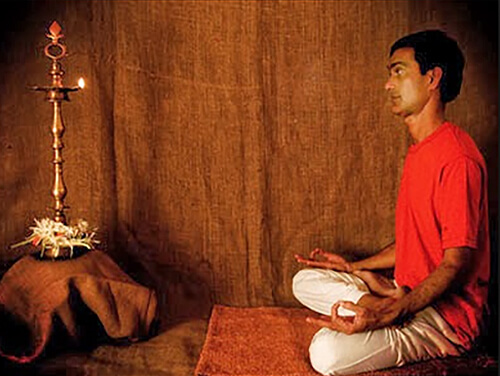 Conventionally there are three kinds of trataka that can be practiced: Antar trataka, Madhya trataka and Bahya trataka.
Antar Trataka(Internal Gazing) : This is done with closed eyes and we have to imagine that we are gazing in the midpoint of our two eyebrows(bhrumadhya dhrishti), or heart, navel or any other internal organ.
Madhya Trataka(Centre Gazing) : In this exercise still gaze is fixed on centre of the eye(bhrumadhya)or tip of the nose(nasagra)or any nearby object made of any material. It can be practiced with aum written in paper, or concentric circles having a black dot in its middle, or a single black dot with open eyes.
Bahya Trataka(External Gazing) : It is performed by fixing our gaze on an distant object like rising sun, moon or a bright planet.
Practice of Trataka
Trataka is practiced by gazing at a fixed point or object without blinking the eyes. The main objective is to bring the mind into focus, and control its wavering tendencies thus making it single pointed and arouse the inner vision. All the thoughts and powers of mind are directed into an unbroken flow. It should be done in a relaxed way without any stress.after achieving this state the hidden potential and powers of mind are awakened naturally.
Technique of Trataka
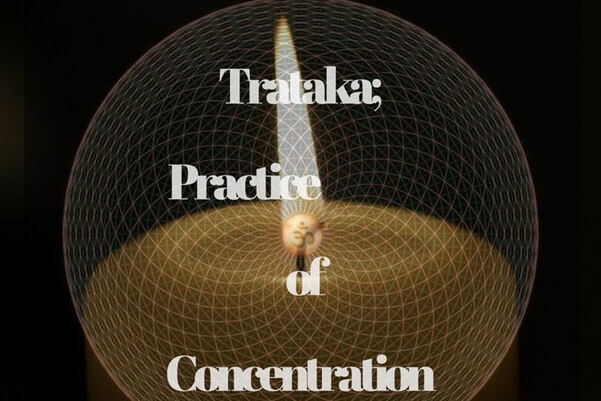 Trataka is practiced by sitting on ground in any of these postures like padmasana(lotus posture), ardha padmasana or sukhasana(comfortable sitting posture) keeping the spine and the back straight. A cow’s ghee lamp is placed at the same level of your eyes at a distance of one meter. Now keeping the mind relaxed one should look at the bright portion of the flame without blinking, till the tears start coming out of your eyes. This is the last phase of trataka. After doing this the eyes should be closed for a while and the practitioner should relax and sit quietly for 3-5 minutes and then slowly open his eyes. The exercise can be repeated 2 to 3 times. It is advised that after performing trataka one should wash his eyes and face with water. The time period of trataka from the beginning till the rolling down of tears differs from person to person. It also depends on the mental condition of the individual. The duration of trataka in normal individuals is generally 3-5 minutes and some people can extended the practice to longer periods.
Benefits of doing Trataka
Hatha yoga states that if trataka is done regularly ,it helps in curing all types of eye related problems and overcoming laziness.regular practice of trataka assists in the practice of shambhavi mudra which finally leads to a state of dharana(contemplation). The practitioner gets a great vision and intuitive insight.
According to Gherand Samhita a yogic text trataka helps in training and guiding the nervous system in a particular direction. It also aids in reducing and curing all kinds of mental tensions. It leads to a state of peacefulness and calmness. The sleep pattern is corrected within a small time with the practice of trataka. Its curing and improving tendency depends upon the mental and physical state of a person. It also assists in arising hypnotic powers and sixth sense if practiced regularly. Trataka acts as a means of advancement between physically oriented exercises and mental exercises which finally lead to higher awakening. It acts as a vital link between hatha yoga and raja yoga. Conventionally it comes under hatha yoga but it may also be considered as a part of raja yoga.
Physiology of Trataka
 Trataka is really helpful in removing all kinds of neural disorders and blockages and it also assists an individual in gaining deep concentration and meditation. The practice of trataka is very conducive in gaining control on our parasympathetic nervous system,lowering of heart rate and respiration rate. It also increases the amplitude of plthysmogram(vasodilation). It increases the peripheral blood circulation of our body. It aids in gaining complete mastery of our mind by eliminating all the emotional disturbances. All kinds of anxieties are removed by doing trataka regularly. Practicing trataka quietens our mental faculties and relaxes our mind by producing well modulated chain of alpha frequency. It is a process of purification. It acts as a catharsis or cleansing by eliminating all our repressed and suppressed emotions and desires from the subconscious level. The practitioner of trataka experiences great relaxation and state of calmness and peace at both physical and mental level.
Precautions
Avoid using candle or other lamps for doing trataka. Always use cow’s ghee lamp for practicing trataka for best results. Do not practice trataka on a flickering flame. Hypersensative persons should do trataka after doing shavasana. Emotionally and mentally disturbed people should do trataka only after practicing the basic postures(asanas) and processes(kriyas), never rub your eyes after doing trataka. Do not strain your eyes too much and do it as per your capacity. Do not read anything or watch television after doing trataka.